A bakery can look simple from the outside — flour, butter, heat, and a good recipe — but the equipment behind the pass is what turns a concept into something you can run every day. For F&B buyers in Hong Kong, the question is rarely “do we need bakery equipment?” It is which bakery equipment fits the space, the menu, the staff, and the volume you actually expect, without creating bottlenecks you only discover after installation.
This guide walks through the core categories of bakery equipment, how they fit together in a real workflow, and the practical considerations that matter most when you are buying for a Hong Kong food business. The goal is to help you compare options with confidence before you commit to a purchase or a layout.
Why Bakery Equipment Choices Shape Your Business from Day One
The equipment you choose affects more than the first bake. It shapes throughput, consistency, energy costs, cleaning routines, and how easily your team can reproduce the same result on a busy Tuesday as on a quiet Monday. A bakery oven that heats evenly but recovers slowly can quietly cap your output. A proofing setup that swings with the room temperature can make fermentation unpredictable. Even small choices — rack heights, table depths, the position of a cooling area — compound across a shift.
-
- Throughput — can the equipment keep pace with your expected orders and peak hours?
-
- Consistency — does it give your bakers a stable, repeatable process?
-
- Operating cost — how much energy, ventilation, and maintenance does it ask for?
-
- Food safety and compliance — does the setup support the hygiene standards your business must meet?
When these four line up, the bakery runs. When one is weak, the rest inherit the problem.
Core Bakery Equipment Categories and What Each One Does
Commercial bakery work usually spans a handful of distinct equipment categories. Understanding what each one contributes makes it easier to compare products and avoid buying for a feature you do not need.
Bakery Ovens
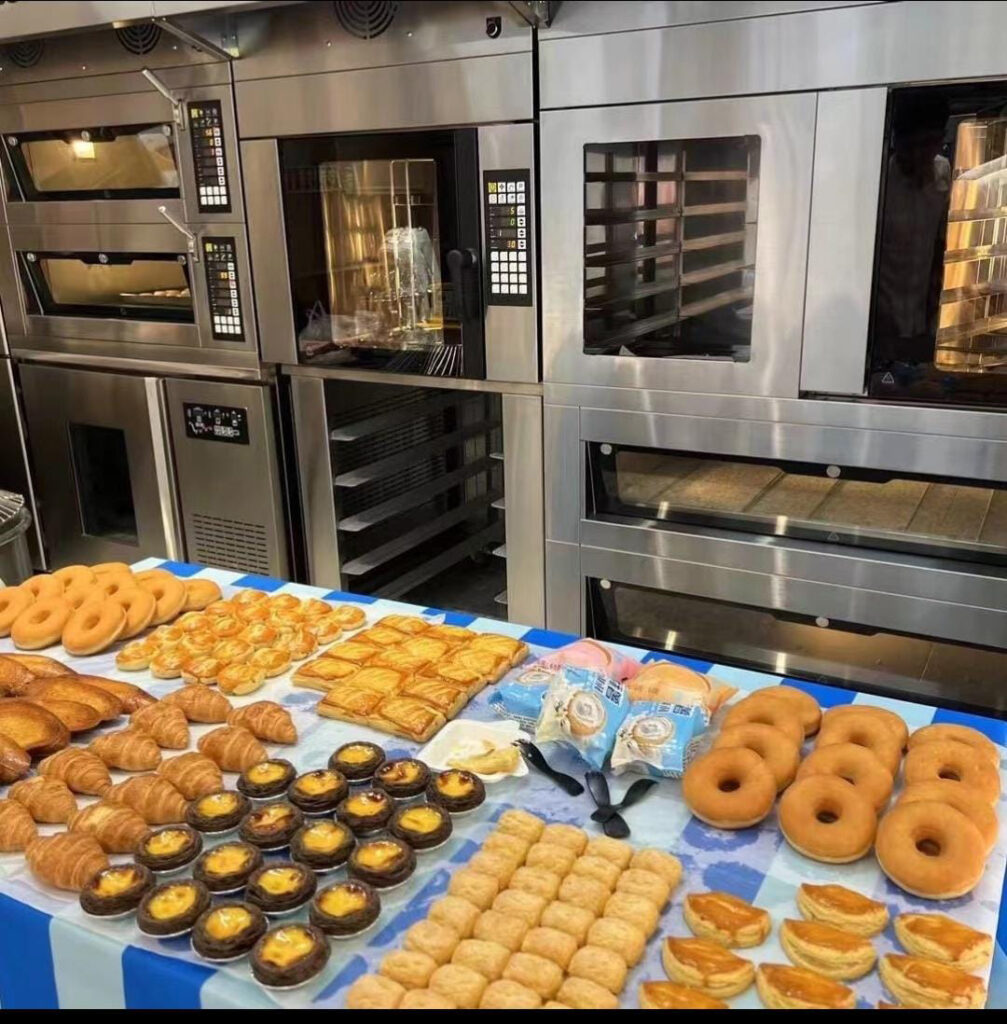
The bakery oven is the centerpiece, and it is also where product type drives the choice most strongly. Different baked goods reward different heat environments:
-
- Deck ovens are a classic fit for bread and similar products that benefit from direct heat from the belt or deck below. They are often associated with crust development and a baking profile that feels close to a traditional hearth.
-
- Convection ovens move air around the chamber, which can support even baking across multiple trays and faster heat transfer for many pastry and batch applications.
-
- Combi/stainless combination ovens blend dry heat with steam, which matters for products that need oven spring, crust control, or a more controlled bakery environment across a wider range of recipes.
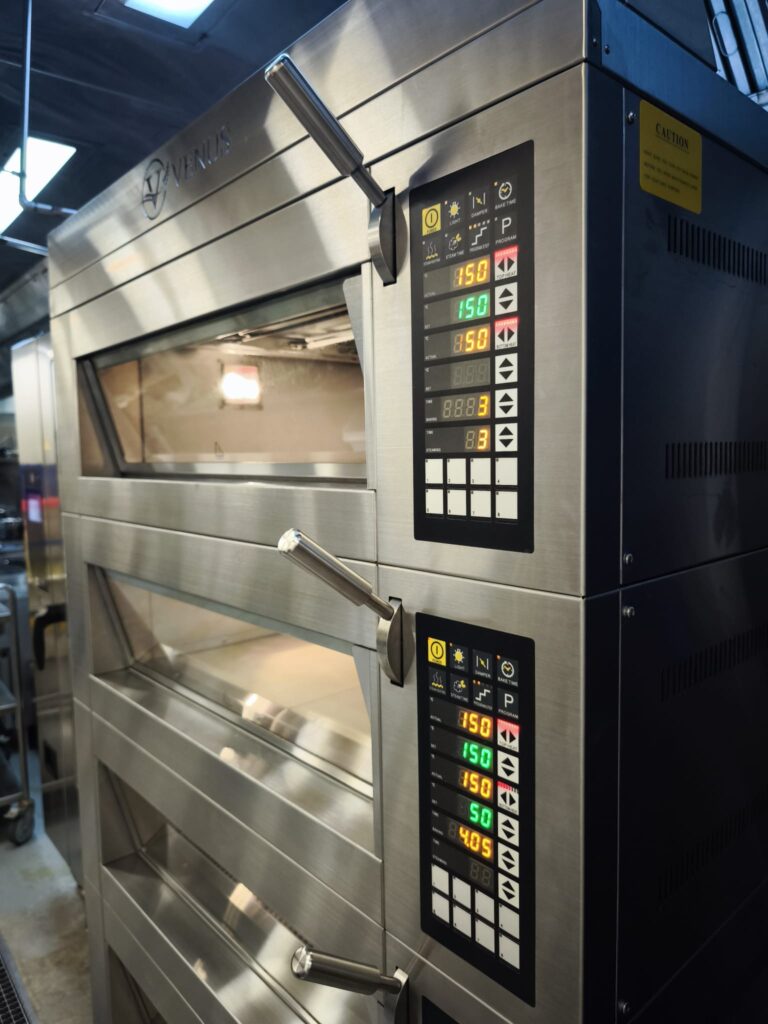
For many Hong Kong buyers, the real question is not “which oven is best” but “which oven best matches the menu and the space.” A small café bakery may need flexible batch baking; a higher-volume operation may care more about recovery time, capacity, and product carryover between loads. If you are evaluating a dedicated bakery oven such as the Venus Bakery Oven, the useful comparison points are the product range it covers, how it handles the bake profiles you actually run, and how it fits into your utilities and layout rather than any single headline feature.
Proofers and Retarders
Proofing is where fermentation is managed, and it is easy to underestimate how much that matters. A proofer gives dough a controlled warm, humid environment so it rises predictably. A retarder does the opposite: it slows fermentation with low temperature, which can support scheduling, flavor development, and production planning. Together, they help a bakery move from “hope the dough behaves today” to a repeatable process.
For buyers, the practical details are capacity, temperature and humidity control, and how the unit fits into the workflow between mixing and baking. In a tight space, a proofing setup can become a scheduling tool as much as a quality tool.
Mixing, Dividing, and Sheeting Equipment
Not every bakery needs industrial-scale dough processing, but the category matters as soon as volume or consistency becomes a priority. Mixers handle ingredient incorporation and gluten development. Dividers and rounders help standardize portion size. Sheeters and molders support laminated and shaped products. The right level of automation depends on the menu and the labor model: a small shop may be fine with a sturdy mixer and hand work, while a higher-output bakery may gain from equipment that reduces variability and repetitive handling.
Supporting Bakery Equipment
Bakeries also depend on the equipment that surrounds the oven and the bench: bakery racks for cooling and staging, work tables sized for the products you make, cooling areas that protect finished product, and storage that keeps ingredients and par-baked items organized. These pieces rarely headline a purchase list, but they often determine whether a layout feels efficient or frustrating once the bakery is running.
Planning a Bakery Layout That Actually Works
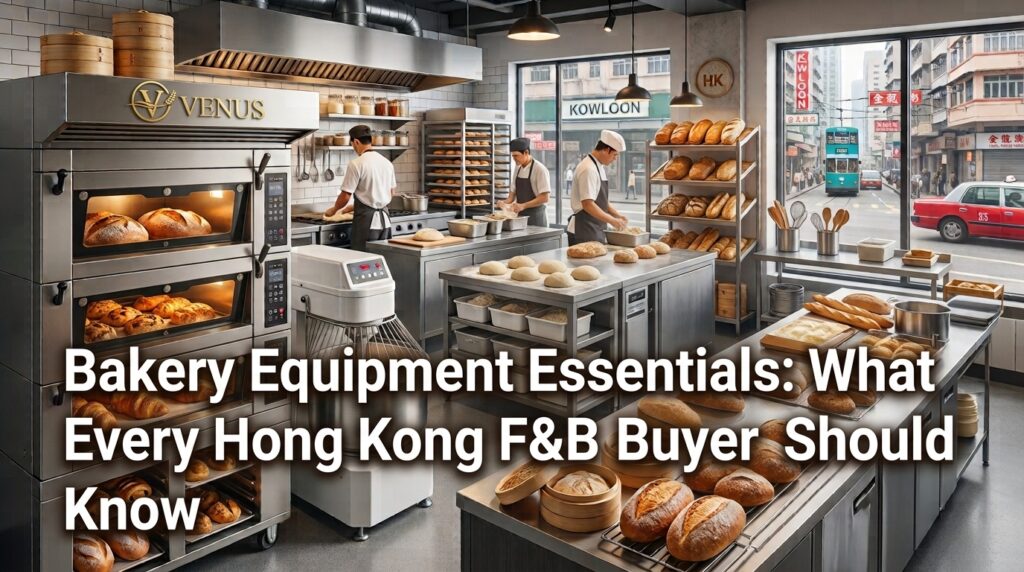
Equipment only performs well when the layout supports the workflow. A sensible bakery flow usually moves in this order: mix, proof, bake, cool, and finish. When the physical layout follows that sequence, staff spend less time crossing back and forth, and product spends less time exposed to the wrong conditions at the wrong stage.
A few layout principles worth keeping in mind:
-
- Keep the workflow linear where possible. Reduce backtracking between mixing, proofing, baking, and cooling.
-
- Plan for heat and ventilation early. Ovens and any steam-using equipment affect the working environment, so airflow and clearance matter as part of the design, not afterthoughts.
-
- Leave room for maintenance and cleaning. Equipment that is hard to reach is equipment that gets serviced less often and cleaned less thoroughly.
-
- Match the layout to the staff. A small team needs clear sightlines and simple staging; a larger team can handle more stations, but only if each station has the space and utilities it needs.
In Hong Kong, where many food businesses work within tight footprints, the layout conversation often starts with the space you actually have rather than the ideal equipment list. That is a sensible place to begin.
Hong Kong Considerations: Space, Regulations, and Sourcing
Buying bakery equipment in Hong Kong comes with a few local realities. Space is often limited, so footprint, stacking potential, and multi-purpose equipment can matter more than they would in a larger market. Utilities can also shape choices: power availability, ventilation, and water access may determine what can be installed as much as what looks best on a spec sheet.
Food business regulations and hygiene requirements are another part of the picture. Equipment and layout should support the cleaning, separation, and sanitation standards your business is expected to meet. [Verify the specific Hong Kong regulatory references — for example the Food and Environmental Hygiene Department (FEHD) and Food Business Regulation (Cap. 132X) context — with current official sources before publishing; treat this section as a pointer to compliance rather than a legal statement.]
On sourcing, local availability of servicing and spare parts is worth weighting alongside price. A lower initial cost is less attractive if lead times for support stretch out later. For a bakery that depends on daily output, reliable after-sales support can be as important as the equipment itself.
How to Match Bakery Equipment to Your Scale and Menu
The easiest way to narrow a bakery equipment list is to start from the business, not the catalog. A few practical questions usually sharpen the choice:
-
- What are you baking, and in what volume? Bread, pastries, cakes, cookies, and laminated products do not all reward the same equipment profile.
-
- What does a peak day look like? Plan for your busiest realistic day, not your average one.
-
- What utilities are available? Power, steam, ventilation, and water can open or close options.
-
- How much space do you really have? Measure the installed footprint, not just the machine body.
-
- Where do you expect to grow? Leave enough headroom that a successful bakery is not immediately constrained by its own equipment.
For a small bakery or café, the focus may be on flexibility and footprint. For a higher-volume operation, consistency, recovery, and capacity may dominate. The right equipment is the one that fits the work you are actually doing.
Questions to Ask Before You Buy Bakery Equipment
Before finalizing a purchase, it helps to ask a closed set of practical questions:
-
- Does the equipment match the product range and expected volume?
-
- Is the footprint and utility requirement realistic for the space?
-
- Are the controls and workflow sensible for the staff who will use it every day?
-
- What support, servicing, and spare parts are available locally?
-
- What are the lead times and installation requirements?
-
- How does the equipment handle cleaning and daily maintenance?
-
- Does the purchase leave room for future growth?
Asking these before buying is often what separates a smooth installation from a costly re-work.
Conclusion
Good bakery equipment is not about collecting the most impressive machine in each category. It is about choosing the right combination for your menu, your space, your team, and your expected volume — then laying it out so the workflow is clean and the daily routine is sustainable. For Hong Kong F&B buyers, that usually means giving extra weight to footprint, utilities, and local support, and treating compliance and hygiene as part of the equipment decision rather than a separate checklist.
If you are evaluating bakery equipment for your business, start with the products you bake, the space you have, and the throughput you need — then compare the options that fit that reality. To explore a bakery oven solution tailored to your setup, inquire about the Venus Bakery Oven or request a consultation through hcfe.com.hk.